
For general information only. This article provides general educational guidance on household cash storage and related insurance considerations. It is not financial, legal, or insurance advice. Policy terms differ between providers — always confirm the specific details of your cover directly with your insurer in writing.
There is no universal answer to how much cash a household should keep at home, or precisely where to keep it. What matters is arriving at a considered, well-informed decision — one that reflects your genuine needs, your home insurance terms, and a realistic understanding of the risks involved. This guide brings those threads together in plain, accessible language.
Why do people keep cash at home?
Keeping a modest cash reserve at home is something many households do for entirely sensible, practical reasons. When bank systems experience outages, when card terminals go offline during power cuts, or when local emergencies disrupt normal payment infrastructure, physical cash can cover immediate essentials — a supermarket trip, a taxi ride, an emergency call-out fee for a plumber or electrician — where digital payments simply aren't available.
Others maintain a small cash float for weekly household budgeting, using the envelope method to allocate spending across categories such as groceries, transport, and leisure. Behavioural economics research suggests this approach can help people exercise tighter control over day-to-day spending than a card-only system, because the physical act of handling notes makes the cost of purchases more tangible.
Emergency preparedness for infrastructure failures, weekly budget management using the envelope method, cash gifts and contributions to family members, avoiding bank charges on small transactions, and maintaining a float for tradespeople or market traders who do not accept card payments.
None of these reasons is unusual or problematic. The question is simply how to do it in a way that is safe, insured, and proportionate to your actual needs.
How much cash is reasonable to keep at home?
The right amount depends on three interconnected factors: the cash sub-limit stated in your home insurance policy, your genuine day-to-day needs, and a frank assessment of the security arrangements in your home. Most independent financial guidance suggests that a household emergency reserve sufficient to cover 48 to 72 hours of essential expenditure — typically somewhere between £100 and £300 — represents a proportionate and manageable starting point for most people.
Understanding insurance cash sub-limits
Most standard UK home contents insurance policies include a specific limit on the amount of cash they will reimburse following theft or accidental loss. This is known as a cash sub-limit, and it is almost always considerably lower than the overall contents sum insured. Typical figures across mainstream insurers range from £200 to £500, though the precise amount depends on the insurer, the policy tier, and any endorsements in place.
Never assume that your existing policy covers the full amount of cash you keep at home. Locate the specific cash sub-limit in your policy schedule. If the wording is unclear, contact your insurer and ask for written confirmation of the limit that applies. Verbal reassurances are not binding and cannot be relied upon in the event of a claim.
| Cash Amount Held | Typical Insurance Position | Recommended Action |
|---|---|---|
| Up to £200 | Usually within a standard policy sub-limit | Verify your specific policy |
| £200–£500 | May fall within limit — confirmation needed | Check policy schedule |
| Over £500 | Likely exceeds standard sub-limit | Contact your insurer |
| Over £1,000 | Almost certainly requires a policy endorsement | Specialist review advised |
If your circumstances mean you regularly need to keep larger sums at home — for instance, because you run a home-based business that handles cash, or because you manage finances on behalf of a relative — it is advisable to speak to your insurer about a specific endorsement, or to seek independent advice about a policy designed for your situation.
How to store cash safely at home
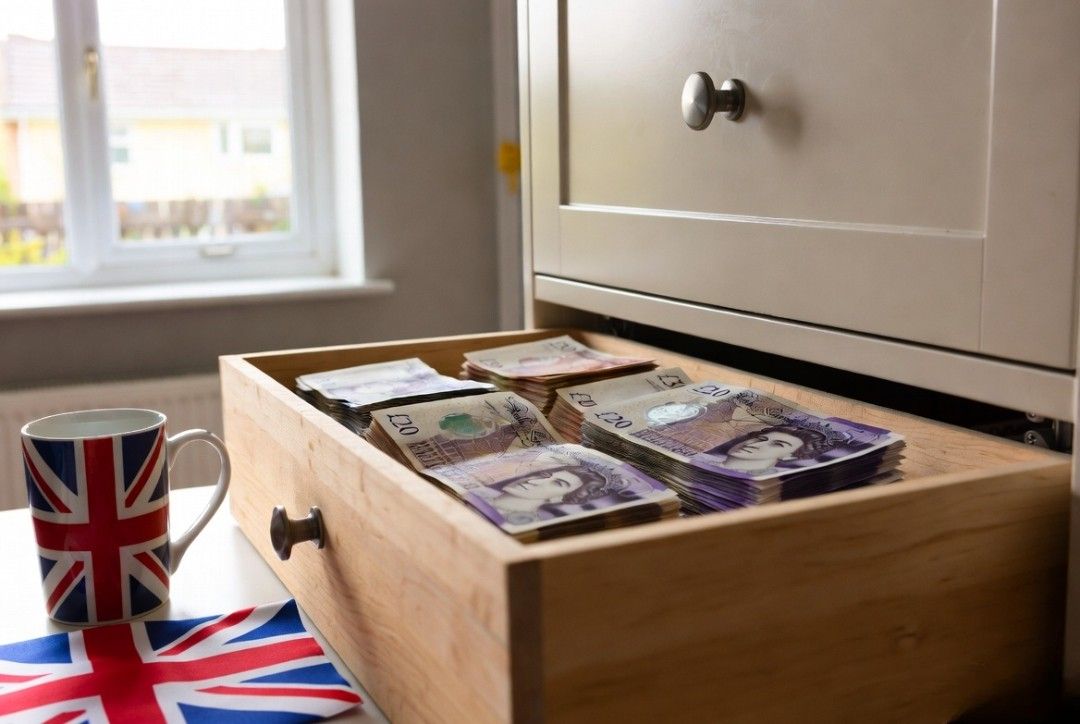
Where and how you store cash is at least as important as the amount you keep. Cash left loosely in a bedside drawer or kitchen shelf offers no meaningful protection against theft or fire, and is unlikely to satisfy the conditions of most insurance policies in the event of a claim.
Certified home safes
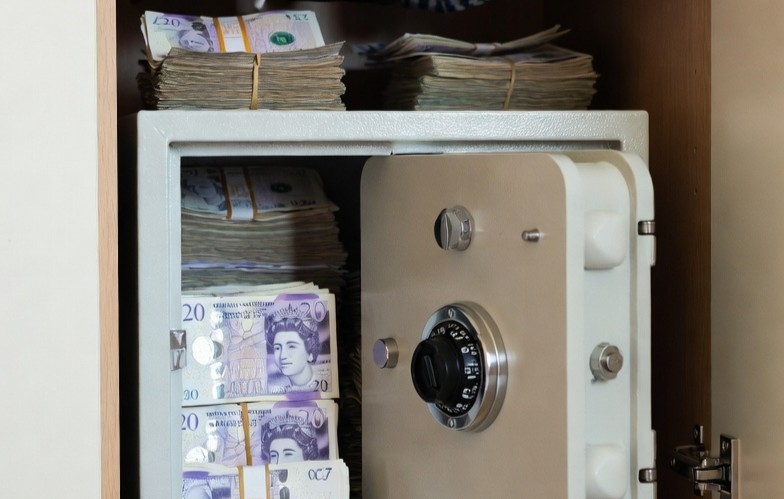
A certified safe is the most reliable way to protect both cash and high-value items at home. In the United Kingdom, safe ratings are issued under the European standard EN 1143-1. The two most relevant grades for home use are:
- Cash Rating 0 / Eurograde 0: Tested to withstand basic attack with common hand tools. Typically appropriate for cash amounts up to £6,000, subject to insurer requirements.
- Cash Rating 1 / Eurograde 1: Offers a higher level of resistance to attack. Generally appropriate for amounts up to £10,000, again subject to your insurer's conditions.
Some insurers specify a minimum safe grade as a condition of enhanced cash cover. Always check your own policy wording, and purchase from reputable suppliers where the EN 1143-1 certification has been awarded by an accredited independent testing laboratory — not simply self-declared by the manufacturer.
Even a substantial safe can be removed entirely if it is not fixed in place. Bolting your safe securely to a solid floor or structural wall greatly reduces this risk, and many insurance policies explicitly require certified safes to be properly anchored before they will recognise the higher cover limits that safe ownership is intended to support.
Common hiding places that provide little real protection
Research into residential burglary consistently finds that experienced offenders check predictable locations as a matter of routine. The following are widely known to be common hiding spots and offer very limited security:
- Under mattresses or inside pillowcases
- Inside kitchen drawers, cereal packets, or freezer containers
- In clothing pockets hanging in wardrobes
- Beneath bathroom tiles or loose floorboards — particularly those near entrances
- In obvious diversion safes (imitation rocks, hollow books with visible wear patterns)
This is not to say that thoughtful concealment has no value — it can contribute to a layered security approach. But concealment on its own, without a physically secure container, should not form the primary basis of your strategy.
Protecting important documents alongside cash
Many people store cash and essential documents in the same location — passports, birth certificates, and insurance schedules are among the first things households consider when thinking about home security. However, there is an important technical distinction worth understanding when it comes to fire protection.
A burglary-rated safe and a fire-rated document box are designed to address different risks, and are not always interchangeable. A safe built to resist forced entry may reach dangerous internal temperatures during a house fire far sooner than a fire-rated document box specifically designed to keep its interior below 177°C — the temperature at which paper begins to char and become permanently damaged.
For thorough protection, consider using a fire-rated document box inside or alongside a security-rated safe, or look for products that carry both certifications from an accredited testing body.
Digital backups as a complementary layer of protection
Photographing or scanning key documents and storing them securely in a reputable cloud service provides a low-cost additional safeguard. If physical documents are destroyed in a fire, flood, or other incident, clear digital copies can considerably speed up the process of getting replacements — whether that is a new passport, a replacement driving licence, or a copy of an insurance schedule needed for a claim.
Many established cloud storage providers offer free storage tiers that are more than adequate for a personal document archive. The most important practical steps are using a strong, unique password, enabling two-factor authentication on the account, and ensuring that at least one other trusted person in your household knows how to access the files should you be unable to do so.
Take clear photographs of both sides of your passport, driving licence, and any insurance policy schedules. Save these in a password-protected folder within a reputable cloud storage service. For most households, this takes well under an hour to set up — and having those records available in an emergency can save significant time and stress.